

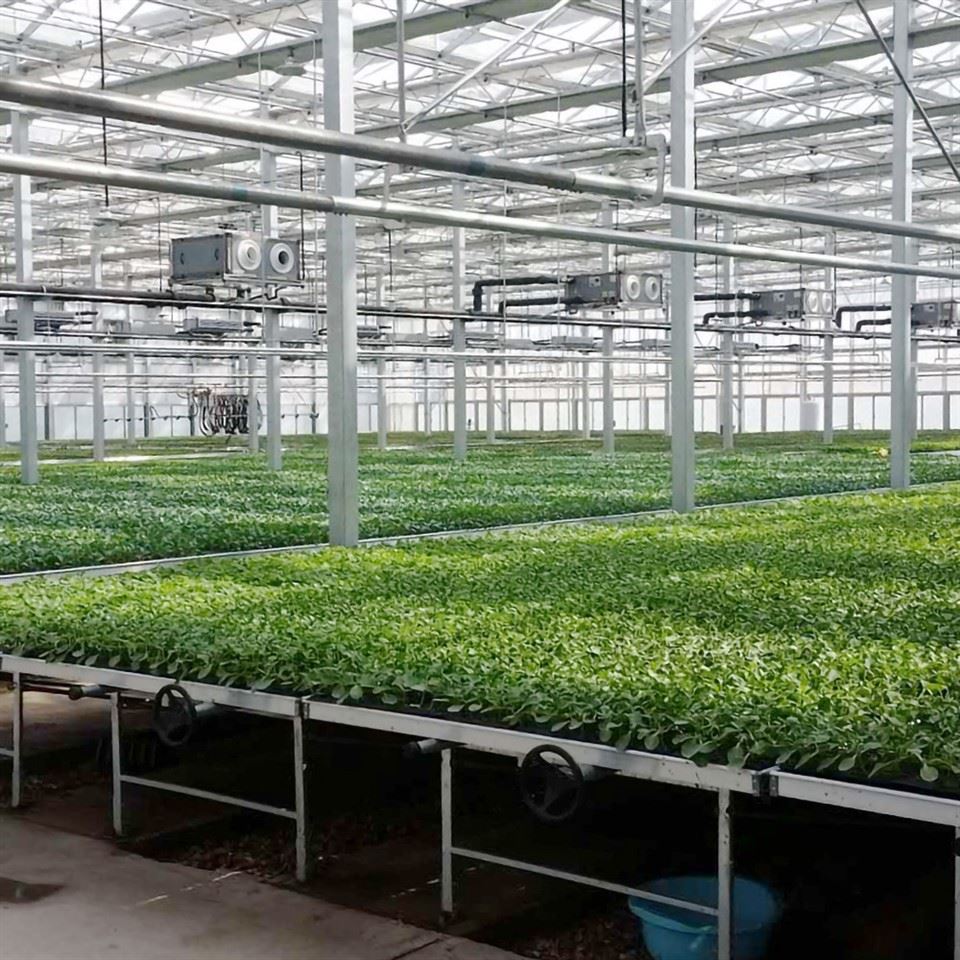


After working with commercial hydroponic setups and visiting farm sites for years, I've come to realize which equipment designs truly hold up in real daily use. Many growers chase overly complicated systems, but the most reliable setups are usually simple, practical, and built to handle real farm humidity, frequent cleaning, and fast crop turnover.
I've seen countless container sizes over the years. The 260×290×66mm size just works, plain and simple. It's not because of any advanced design. It's because it fits most indoor growing layouts, stacks easily, and cleans quickly between harvests.
These growing containers are made of food-safe PVC. If you've spent any time inside active hydroponic rooms, you know how heavy mineral buildup can get after months of nutrient watering. I've checked systems that ran nonstop for years. Surprisingly, this type of plastic rarely cracks or turns brittle. Even with constant wetting and chemical residue, it stays stable.
Farm crews scrub these containers hard after every batch. That's just daily farm life. No strange leaching issues show up, even after years of repeated soaking. For livestock fodder, microgreens, and young herb starts, this container style is consistently dependable. Honestly, most operational farms don't need fancier containers. They just need ones that won't fail mid-season.
One thing I always tell new growers: never force your farm layout to fit generic equipment. Greenhouses are all different. Some have low beams. Some have weak floor loading limits. Some have tiny door access. Standard off-the-shelf hardware often doesn't fit at all.
That's why we always adjust support sizes based on real site measurements. We don't use fixed templates. We just build what the space actually needs. Most sites end up using modified versions of our common 2.9m and 5.8m lengths, but custom adjustments are almost always necessary.
A lot of growers don't realize how many small accessories actually affect long-term usability. Things like end caps, basic pipe fittings, simple drainage parts, and light mounts sound minor. But in daily operation, missing these small pieces creates constant headaches. I've seen farms skip small accessories and end up with messy water leakage, uneven lighting, and slower crop growth.
Humidity is the silent enemy in hydroponic growing spaces. Cheap metal frames degrade fast here. I've seen low-quality setups rust and bend within two or three growing seasons. It's frustrating for farm owners because replacement costs add up quickly.
With basic weekly cleaning, though, good-quality hardware lasts extremely well. I visited a farm installed back in 2014. They still use their original growing supports and containers today. The only difference? They stick to a simple cleaning routine. It sounds trivial, but it makes a massive difference.
Movable growing supports are one of the most underrated upgrades for commercial greenhouses. Traditional fixed rows waste so much space. Every extra walkway takes away area that could be used for actual crop production.
Sliding systems fix that problem. You only need one moving aisle. Workers shift the rows manually to access any section they need. It's simple, physical work, no complex automation required. In my experience, most farms overcomplicate their greenhouse logistics. This straightforward sliding design cuts unnecessary labor and maximizes growing area.
That said, sliding systems aren't perfect for every farm. Super small hobby setups rarely benefit from them. If you only run a few rows, movable frames are overkill. But for commercial operations with continuous harvest cycles, the difference in productivity is obvious.
Build quality matters most in humid environments. We use hot-dip galvanized supports because regular steel simply won't last. I've done side-by-side tests. Standard coating fades quickly under constant moisture and nutrient splash. Proper galvanized layers resist oxidation for years, even in damp indoor air.
The frame structure mixes sturdy steel and lighter aluminum parts. The balance is intentional. Too heavy, and sliding becomes difficult for staff. Too light, and the structure loses stability under full crop load. We've tested countless frame variations over time. This mixed build works best for daily commercial use.
For growing surfaces, I usually recommend solid plastic panels for fodder production. Mesh works fine for air flow, but tiny seeds wash out easily during flooding cycles. Farms growing microgreens or fine fodder always struggle with seed loss on mesh. Solid panels make cleaning easier too, which saves labor every single harvest.
Closed-loop water circulation is another feature growers underestimate. Open water systems waste insane amounts of water and fertilizer. I've watched farm utilities bills skyrocket from inefficient watering habits.
Recirculating systems reuse most water. The water drains into a central tank after each flood cycle. Staff check water conditions every morning and adjust nutrients accordingly. It's not a fully automatic "set-it-and-forget-it" system. It still needs basic human observation. But it drastically reduces waste and keeps growth far more consistent.
From my site visits across different climate regions, I've seen how environment changes equipment requirements entirely.
In desert areas like Riyadh, extreme heat and airborne sand wear down generic equipment fast. Regular frames scratch and corrode quickly. Our thicker galvanized builds handle those harsh conditions much better. Water recycling also helps farms survive strict freshwater shortages common in dry regions.
In colder areas like Norway, winter snow weight and freezing temperatures create different challenges. We reinforce frame strength and insulate water lines to prevent freezing. Many local greenhouses increased their annual yield just by switching to movable rows, without expanding their building size at all.
Factory production quality also makes a huge difference. I've seen imported frames with poor welds fail within a season. Every joint needs manual inspection. Machine-only quality checks always miss small flaws. Human weld inspection is mandatory for long-term reliability.
Packaging and shipping is another overlooked factor. International shipping involves constant vibration, humidity changes, and compression. Unprotected metal parts arrive bent or rusted. We separate every component, use foam cushioning, bubble filling, and wooden crates for heavier pieces. It's extra work, but it prevents on-site installation problems overseas.
I always suggest clients review real factory footage and farm case photos before ordering. Generic product pictures tell nothing. Raw production clips, welding closeups, and actual container loading shots show true build quality. Most serious farm operators I work with always ask for real on-site footage first.
Common Grower Questions (Real Field Answers)
Do standard containers fit all movable frame sizes? In practice, yes. We adjust the internal cross supports during assembly to ensure a tight fit. No wobbling, no sliding during watering. We always test each combination before shipping. Custom-sized frames work just as well as standard ones with these containers.
Is this system suitable for all farm sizes? Not exactly. Small hobby farms won't see much benefit. But any commercial operation with continuous planting cycles will notice better space usage and easier daily management. It's a practical upgrade for serious growers, not a mandatory setup for everyone.
Can your equipment be compatible with containers from other brands on the market?
In most cases, yes. Our brackets and slides are designed according to the standard size of 260×290mm, so most mainstream similar containers can be placed directly on them. However, if it's a custom container of a special size made by yourself, we can adjust the internal support spacing during assembly to ensure it's stable.
Does the moving system have requirements for the ground?
Yes, it does. The sliding system requires the ground to be relatively flat so that it can slide smoothly. If your greenhouse is on a muddy ground, we usually recommend laying a simple concrete floor or installing a flat track first. If the ground is uneven, not only will it be difficult to push and pull, but it can also damage the slide wheels.
If I want to expand the scale in the future, is this system easy to expand?
Very easy. This is also the reason why we don't use fixed templates. Our brackets and tracks are modular, and you can add new rows of racks at any time by building them on top of the existing ones. As long as your greenhouse space allows, you can simply connect to the existing tracks to continue extending, without having to dismantle and reinstall the original ones.
Will these plastic containers age and become brittle under strong light?
We added UV (ultraviolet) resistant components in the material. Although any plastic will have a lifespan limit when exposed to long-term sunlight, our containers can be used for five or six years under normal indoor or greenhouse lighting. If you are using them in an open area with extremely strong sunlight, it is recommended to add a shading net, which can significantly extend their lifespan.
Does this system require frequent maintenance?
The daily maintenance is very simple. As mentioned earlier, spend some time each week cleaning the dust or water accumulation on the slides and checking if there are any foreign objects stuck in the wheels. No professional lubricants are needed, and no complex maintenance is required. As long as the tracks are kept clean, it can continue to run smoothly.

Hot Tags: Custom Ebb and Flow Rolling Benches | Space-Saving Hydroponic Grow Benches, China Custom Ebb and Flow Rolling Benches | Space-Saving Hydroponic Grow Benches manufacturers, suppliers, factory, Commercial Flood and Drain Nursery Bed, greenhouse seedbed, greenhouse seedbed system, agricultural seedbed, Ebb and Flow Seedbed


