

First, let's set the scene: sunlight isn't just one flat thing. It's a mix of wavelengths-some we can see (that's the visible spectrum, from red to blue) and some we can't (ultraviolet, or UV, and infrared, or IR). Each of these does something totally different for plants. UV helps with things like plant defense compounds (think flavor in tomatoes or color in flowers), red light drives photosynthesis big time, blue light keeps plants stocky instead of leggy, and IR is basically heat. Here's the catch: too much of any of these, even if it's bright, can cause problems. Blasting crops with unfiltered midday sun, for example, can burn leaves, zap moisture, and even shut down photosynthesis temporarily-we call that photoinhibition, and it's a real bummer for yields.
This is where internal shading comes in, and it's way different from external shading, which sits outside the greenhouse. External systems block light before it even gets in, but they also let a ton of IR escape? No, wait-actually, external shade mostly just cuts total light, but internal shade works right above the crop canopy, so it's more targeted. Wait, let's make that clear: if you've ever used a Greenhouse External Shading System, you know it's like draping a big curtain over the entire greenhouse roof. It does cool things down, but it also doesn't filter light-just blocks some of it. Internal shade, though, uses materials that are selective, not just black cloth. That's the game-changer for the light spectrum.
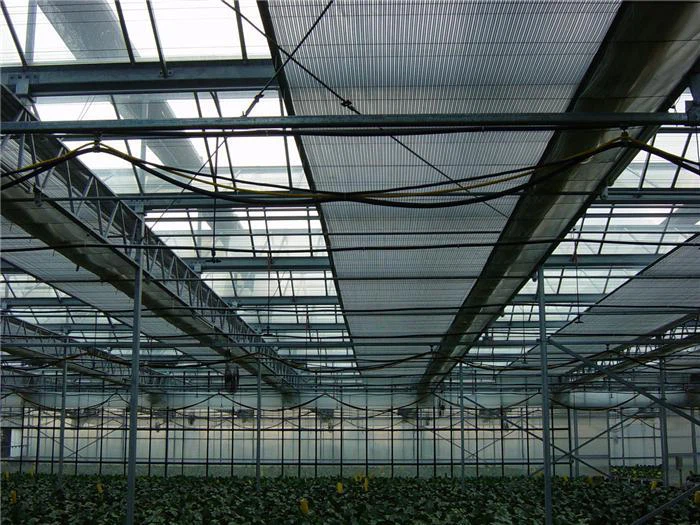
Let's talk materials for a sec because that's the secret sauce. Most internal shading systems use either polyolefin (PO) films, polyester fabrics, or even mesh with specific coatings. These aren't one-size-fits-all. For example, if you're growing leafy greens like lettuce, you might want a shade that keeps a little more blue and red light, because those are the workhorses for photosynthesis. If you're growing tomatoes or herbs that need that extra flavor boost, you might go for a shade that lets a tiny bit of UV pass through, without burning the plants. Here's the science bit: these materials absorb or reflect certain wavelengths and let others through. IR, which is the heat stuff, gets reflected back up toward the roof, so it doesn't bake the lower canopy. UV can be filtered out partially-usually 20-40% instead of 100%-which is enough to prevent sunscald but not so much that your plants miss out on those defense compounds. Blue and red light? Those get transmitted at higher rates, like 70-90%, because you don't want to mess with the stuff that makes your plants grow.
Wait, let's test this with a real example. I talked to a tomato grower in California last year who was dealing with a huge problem: midday sun was burning his fruit, and his photosynthesis was dropping by 30% during the hottest part of the day. He tried external shade, but that made his greenhouse way too dark in the morning and evening, and his plants got leggy because of lack of blue light. We switched him to our Automatic Greenhouse Shading System with a selective shade material that cuts total light by 35%, blocks 60% of IR, filters 40% of UV, and leaves most blue and red intact. After a month, his fruit burn was down to almost zero, his photosynthesis didn't drop at all midday, and his tomato yield went up 12% because his plants could keep working instead of shutting down. That's the difference between a generic shade and one that actually manipulates the spectrum, not just blocks light.
Another thing people don't talk about: internal shading affects light distribution inside the greenhouse, not just the spectrum. When you hang shade above the canopy, it diffuses the light instead of letting it come in as harsh, direct beams. Those direct beams can create hotspots where light is super intense, and shade spots where it's barely there-bad for consistent growth. Diffused light, on the other hand, spreads evenly across all leaves, even the lower ones that would usually be in the shade. And when that diffused light has a spectrum that's optimized for photosynthesis, every single leaf is working harder, not just the top ones. I remember a lettuce grower in Arizona who went from having a lot of smaller, inconsistent heads to uniform, big ones after switching-they said it was like every leaf got a turn in the light, not just the first row.

But wait, is there a down side? Like, could you mess up the spectrum too much? Absolutely. If you pick a shade that blocks too much blue light, your plants will get leggy and weak, which makes them prone to disease. If it blocks all UV, your herbs will have way less aroma, which kills their market value. That's why matching the shade to your crop is non-negotiable. For example, cannabis growers (yep, they're big greenhouse users too) often use shades that keep UV high for trichome production, while strawberry growers might want a little less UV to prevent fruit discoloration. The great thing about modern internal shading systems is that they're adjustable-you can open them partially in the morning when light is softer, close them more at midday, and open them up in the evening when you want to let more light in. That's where the automatic parts come in, which is why so many growers are ditching manual systems now.
Let's get a little more technical, but keep it real. Studies from Wageningen University (super reputable for greenhouse ag) found that selective internal shading can increase the ratio of red to far-red light inside the canopy by 15-20%. Far-red light is the stuff that tells plants to stretch-so a higher red:far-red ratio means stockier plants, less lodging (falling over), and better fruit set. That's a huge win for heavy crops like tomatoes or cucumbers. The same study also found that filtered IR reduces canopy temperature by 2-4 degrees Celsius, which cuts down on transpiration-so you save water, and your plants don't wilt as much. No more overwatering to keep up with hot, dry air.
I should also mention that internal shading is way more energy-efficient than you think. Unlike external shade, which can let more heat get trapped in the greenhouse at night (because it's outside, it doesn't insulate), internal shade can double as an insulation layer when it's closed at night. That means you save on heating costs in the winter too-win-win. A lot of growers I work with don't realize their internal system does double duty: spectrum manipulation during the day, insulation at night. That's why it's a better investment than just a standalone shade or a standalone heater.
Wait, let's circle back to that spectrum thing because it's the core here. When someone asks, "How does internal shading affect the light spectrum?" the simple answer is: it doesn't just dim it-it refines it. It cuts the stuff that hurts plants (extreme IR that causes heat stress, too much UV that burns tissue, harsh direct light that triggers photoinhibition) and keeps the stuff that helps (blue for structure, red for photosynthesis, just enough UV for flavor and defense). It's not about "less light"-it's about better light.
I've been in this game for 10 years, talking to growers every day, and the number one mistake I see is buying the cheapest shade they can find without thinking about the spectrum. A lot of big-box stores sell generic black shade cloth that blocks all kinds of good light, not just the bad. That might work for a while, but long-term, you'll see lower yields, worse crop quality, more disease, and higher energy bills. Our internal shading systems are made with custom materials tailored to different crops-so if you're growing peppers, we've got a shade that works for peppers; if you're growing orchids, we've got something softer for their delicate leaves.
Now, if you're thinking about making the switch, here's what I recommend. First, figure out your main pain point: is it heat stress? Fruit burn? Leggy plants? Low yields? Then, think about your crop-leafy greens, fruiting veggies, herbs, flowers? Then, check out our Greenhouse Internal Shading System page, where you can find more details on materials, automation, and crop-specific solutions. If you're not sure if internal is better than external, take a quick look at the Greenhouse External Shading System page too-we'll help you compare which fits your setup.
At the end of the day, growing in a greenhouse is all about control. You want to be able to tweak every variable to get the best possible crop, and light spectrum is one of the most important variables you can manipulate. Internal shading systems aren't just a luxury-they're a tool that lets you take that control back, without the hassle of manual work or guesswork. If you're ready to stop guessing at shade and start optimizing your light, reach out to our team-we can walk you through what works for your greenhouse, no sales pitch, just real advice from people who work with greenhouses every day. Don't settle for generic shade that does more harm than good; upgrade to a system that actually understands how light affects your plants.


