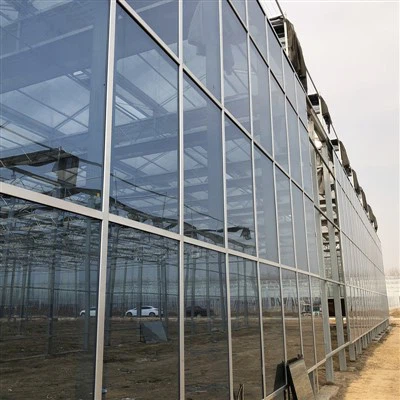
In greenhouse cultivation, how can we help fruits and vegetables grow better and achieve higher yields? Today, Kunsheng Agriculture shares a seemingly simple yet highly intelligent management technique-vine hanging-that is quietly transforming traditional farming practices. By guiding plants to grow upward, vine hanging not only optimizes spatial layout but also delivers multiple benefits in terms of light exposure, ventilation, and overall crop management.

1. Three-dimensional Cultivation: Efficient Use of Greenhouse Space
Greenhouse ground space is limited, while vertical space is often overlooked. For vining crops like cucumbers and tomatoes, letting them spread horizontally leads to tangled foliage and excessive ground occupation. Vine hanging uses ropes to pull plants upward, freeing up ground space to allow for higher planting densities and improve land utilization.
2. Uniform Light Exposure: Enhancing Photosynthesis
Crop growth relies entirely on sunlight. In ground-spreading cultivation, overlapping leaves cause the middle and lower layers to receive insufficient light, leading to yellowing and wilting. Vine hanging arranges leaves in an orderly manner, ensuring all layers from top to bottom are exposed to natural light. This promotes efficient photosynthesis, helping fruits accumulate nutrients and improve taste and quality.
3. Improved Ventilation and Disease Prevention: Reducing Pests and Diseases
Greenhouses are relatively enclosed with high humidity, creating ideal conditions for pests and diseases. Vine hanging maintains proper spacing between plants, enhancing air circulation, accelerating moisture evaporation from leaf surfaces, and lowering humidity. This reduces pathogen breeding opportunities and helps control pests, creating a healthier growing environment.
4. Easier Farm Operations: Boosting Work Efficiency
Neatly arranged plants simplify daily management. Tasks such as pruning, flower thinning, pesticide application, and harvesting become much more convenient, reducing the strain of bending over and improving work efficiency while enabling more precise crop care.
5. Smooth Nutrient Transport: Better Fruit Quality
Keeping stems upright through vine hanging ensures unobstructed transport of water and nutrients from roots to fruits. Additionally, growing fruits off the ground avoids contact with soil, reducing damage and deformities, resulting in more uniform appearance and stable quality.
6. Regulating Growth: Promoting Healthy Development
Adjusting the tightness and height of hanging ropes allows for gentle guidance of plant growth, preventing overgrowth or stunted development and helping crops maintain balance at different growth stages.
As a practical cultivation management method, vine hanging is suitable for common crops like tomatoes and cucumbers, and can be adapted to other vining vegetables as needed. It is important to adjust practices flexibly based on growth stage, greenhouse conditions, and to choose appropriate rope materials to avoid damaging plants.
Through scientific and rational vine hanging management, growers can create optimal growing conditions within limited greenhouse space, laying a solid foundation for harvesting high-quality, high-yield crops.