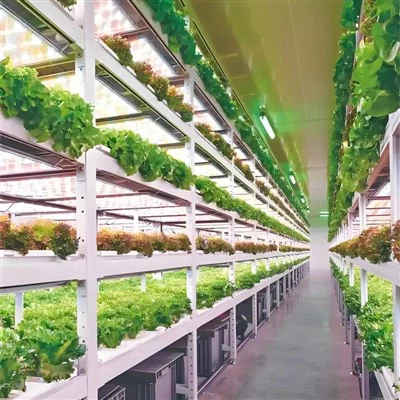

Agricultural seedling equipment plays a crucial role in modern agriculture, enabling efficient and large - scale seedling production. However, these equipment are often exposed to various harsh environments, including high humidity, corrosive chemicals, and fluctuating temperatures. Understanding the anti - corrosion properties of agricultural seedling equipment is essential for ensuring its long - term performance and durability. As an agricultural seedling equipment supplier, I am well - versed in the factors affecting corrosion and the measures to enhance anti - corrosion capabilities.
Factors Affecting Corrosion of Agricultural Seedling Equipment
Environmental Conditions
One of the primary factors influencing the corrosion of agricultural seedling equipment is the environment in which it operates. Greenhouses, where a significant amount of seedling production takes place, typically have high humidity levels. The presence of water vapor in the air can lead to the formation of a thin layer of moisture on the surface of the equipment. When combined with oxygen, this moisture can initiate the corrosion process, especially on metal components.
In addition to humidity, the use of fertilizers and pesticides in seedling production can also contribute to corrosion. Many fertilizers and pesticides contain chemicals that are corrosive to metals. For example, some nitrogen - based fertilizers can react with metal surfaces, accelerating the corrosion rate. Similarly, pesticides with acidic or alkaline properties can cause damage to the protective coatings of the equipment, exposing the underlying metal to corrosion.
Material Selection
The type of material used in the construction of agricultural seedling equipment also has a significant impact on its anti - corrosion properties. Common materials used in seedling equipment include metals such as steel, aluminum, and galvanized iron.
Steel is a widely used material due to its strength and durability. However, it is prone to rusting when exposed to moisture and oxygen. To improve its anti - corrosion properties, steel can be coated with a layer of zinc through a process called galvanization. Galvanized steel has a protective zinc layer that acts as a sacrificial anode, corroding in place of the steel. This significantly extends the lifespan of the equipment.
Aluminum is another popular material for agricultural seedling equipment. It has a natural oxide layer on its surface that provides some protection against corrosion. However, in environments with high levels of chloride ions, such as coastal areas, the oxide layer can be damaged, leading to corrosion. Special coatings can be applied to aluminum to enhance its anti - corrosion performance.
Design and Maintenance
The design of agricultural seedling equipment can also affect its anti - corrosion properties. Equipment with complex shapes and hard - to - reach areas may trap moisture and dirt, creating an ideal environment for corrosion. A well - designed equipment should have smooth surfaces and proper drainage to prevent the accumulation of water.
Regular maintenance is also crucial for preventing corrosion. This includes cleaning the equipment regularly to remove dirt, debris, and chemical residues. Inspecting the equipment for signs of corrosion and damage, and promptly repairing or replacing any corroded parts can help extend the lifespan of the equipment.
Anti - Corrosion Measures for Agricultural Seedling Equipment
Coating Technologies
One of the most effective ways to enhance the anti - corrosion properties of agricultural seedling equipment is through the use of coatings. There are several types of coatings available, each with its own advantages and disadvantages.
Epoxy coatings are commonly used for metal equipment. They provide a hard, durable surface that resists corrosion, abrasion, and chemical attack. Epoxy coatings can be applied in a variety of thicknesses, depending on the level of protection required.
Powder coatings are another popular option. They are applied as a dry powder and then cured under heat to form a smooth, protective layer. Powder coatings are environmentally friendly, as they do not contain solvents, and they offer excellent corrosion resistance.
Material Selection and Treatment
As mentioned earlier, choosing the right materials is crucial for anti - corrosion. In addition to galvanized steel and aluminum, stainless steel is also a good choice for seedling equipment. Stainless steel contains chromium, which forms a passive oxide layer on the surface, providing excellent corrosion resistance.
Surface treatments such as passivation can also improve the anti - corrosion properties of metals. Passivation involves treating the metal surface with a chemical solution to remove impurities and enhance the formation of a protective oxide layer.
Design Optimization
Designing the equipment to minimize the risk of corrosion is essential. This includes avoiding sharp corners and crevices where moisture can accumulate. Providing proper drainage channels and ventilation can also help reduce humidity levels and prevent the formation of condensation.
Examples of Anti - Corrosion in Agricultural Seedling Equipment
Gutter in Greenhouse
A Gutter in Greenhouse is an important component of a greenhouse, as it helps to collect and drain rainwater. To prevent corrosion, gutters are often made of galvanized steel or aluminum. Galvanized steel gutters have a zinc coating that protects the steel from rusting, while aluminum gutters have a natural oxide layer that provides some corrosion resistance. In addition, some gutters are coated with a special anti - corrosion paint to further enhance their durability.


RO Water System for Greenhouse
The RO Water System for Greenhouse is used to purify water for seedling irrigation. The components of the RO water system, such as pipes and tanks, are often made of corrosion - resistant materials. Stainless steel is commonly used for pipes and tanks due to its excellent corrosion resistance. The membranes in the RO system are also designed to be resistant to chemical and biological corrosion.
Greenhouse Container Growing System
The Greenhouse Container Growing System is used to grow seedlings in containers. The containers are typically made of plastic or metal. Plastic containers are inherently corrosion - resistant, while metal containers can be treated with anti - corrosion coatings. The frames and supports of the growing system are often made of galvanized steel or aluminum to prevent rusting.
Conclusion
The anti - corrosion properties of agricultural seedling equipment are of utmost importance for ensuring its long - term performance and reliability. By understanding the factors affecting corrosion, such as environmental conditions, material selection, and design, and implementing appropriate anti - corrosion measures, such as coating technologies and material treatments, we can significantly extend the lifespan of the equipment.
As an agricultural seedling equipment supplier, we are committed to providing high - quality, corrosion - resistant equipment to our customers. Our products are designed and manufactured to withstand the harsh conditions of seedling production, ensuring that your investment in seedling equipment will last for years to come.
If you are interested in our agricultural seedling equipment or have any questions about anti - corrosion properties, please feel free to contact us for further discussion and procurement. We look forward to working with you to meet your agricultural seedling production needs.
References
- Jones, D. A. (1996). Principles and Prevention of Corrosion. Prentice Hall.
- Uhlig, H. H., & Revie, R. W. (1985). Corrosion and Corrosion Control: An Introduction to Corrosion Science and Engineering. Wiley.
- Fontana, M. G. (1986). Corrosion Engineering. McGraw - Hill.