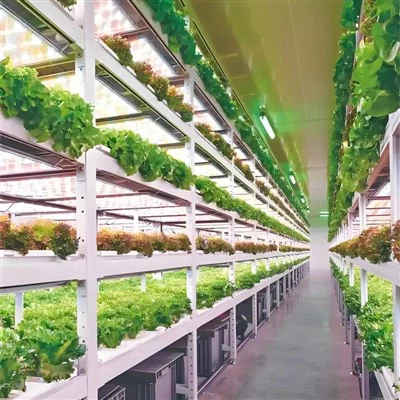

Hey there! As a supplier of the IoT Greenhouse Monitoring System, I'm super excited to chat with you about the communication range of this amazing technology.
Let's start by understanding what an IoT Greenhouse Monitoring System is all about. It's a cutting - edge solution that helps greenhouse owners keep a close eye on various environmental factors like temperature, humidity, light intensity, and soil moisture. With this system, you can make informed decisions to optimize plant growth and increase yields.
Communication Technologies in IoT Greenhouse Monitoring
There are several communication technologies used in IoT greenhouse monitoring systems, and each has its own unique range.
Wi - Fi
Wi - Fi is one of the most common communication methods in IoT devices. It's convenient and widely available. In a greenhouse setting, a typical Wi - Fi router can cover a range of about 100 - 300 feet (30 - 90 meters) indoors. However, this range can be affected by many factors. For example, the presence of walls, metal structures, and other obstacles can significantly reduce the signal strength. If your greenhouse has a lot of metal frames or thick insulation, the effective range of Wi - Fi might be closer to the lower end of that range.
The advantage of Wi - Fi is that it offers relatively high - speed data transfer. This means that you can quickly get real - time data from your sensors to your monitoring device, whether it's a smartphone, tablet, or computer. But the limited range can be a drawback, especially for large greenhouses.
ZigBee
ZigBee is another popular option for IoT communication. It operates on a low - power, wireless mesh network. The range of a ZigBee network can vary, but generally, it can cover up to 100 meters in an open space. In a greenhouse, the range might be a bit less due to the presence of plants and other structures.
One of the great things about ZigBee is its ability to form a mesh network. This means that each device in the network can act as a relay for other devices, extending the overall range. So, even if a sensor is far from the main gateway, it can still communicate with it through other sensors in the network.
LoRaWAN
LoRaWAN (Long Range Wide Area Network) is designed for long - range communication. It can cover distances of up to several kilometers, depending on the environment. In a rural area with few obstacles, LoRaWAN can easily reach 5 - 15 kilometers. In a greenhouse, the range might be reduced, but it can still cover a large area.
LoRaWAN is ideal for large - scale greenhouses or those located in remote areas. It uses low - power consumption, which means that the sensors can run on batteries for a long time. However, the data transfer rate is relatively low compared to Wi - Fi, but for monitoring environmental data, this is usually not a big issue.
Factors Affecting Communication Range
There are several factors that can affect the communication range of an IoT greenhouse monitoring system.
Obstacles
As mentioned earlier, obstacles like walls, metal structures, and plants can block or weaken the signal. Metal is particularly problematic because it can reflect and absorb radio waves. For example, if your greenhouse has a lot of metal pipes or frames, it can create dead zones where the signal is very weak or non - existent.
Interference
Other wireless devices operating in the same frequency band can cause interference. For example, if there are other Wi - Fi routers or Bluetooth devices nearby, they can disrupt the communication of your IoT system. This can lead to data loss or slow data transfer.
Antenna Quality
The quality of the antenna on the sensors and the gateway can also affect the communication range. A high - quality antenna can transmit and receive signals more effectively, extending the range. Some sensors come with built - in antennas, while others allow you to attach an external antenna for better performance.
Choosing the Right Communication Range for Your Greenhouse
When choosing an IoT greenhouse monitoring system, you need to consider the size and layout of your greenhouse.
If you have a small greenhouse, say less than 1000 square feet, a Wi - Fi - based system might be sufficient. It's easy to set up and provides fast data transfer. You can place the sensors within the range of the Wi - Fi router and monitor the environmental conditions in real - time.
For medium - sized greenhouses (1000 - 5000 square feet), ZigBee or a combination of Wi - Fi and ZigBee might be a good choice. ZigBee's mesh network can help extend the range and ensure that all sensors are connected.
If you have a large greenhouse, especially one that covers several acres or is located in a remote area, LoRaWAN is the way to go. Its long - range capabilities can cover the entire greenhouse, and the low - power consumption means that you don't have to worry about frequent battery changes.
The Role of the Greenhouse PLC Control System
The Greenhouse PLC Control System works hand in hand with the IoT Greenhouse Monitoring System. The monitoring system collects data from the sensors, and the PLC control system uses this data to make adjustments to the greenhouse environment.


The communication between the monitoring system and the PLC control system is crucial. Depending on the distance between the sensors and the PLC controller, you need to choose the right communication technology. For example, if the sensors are close to the controller, Wi - Fi or ZigBee can be used. If they are far apart, LoRaWAN might be a better option.
Conclusion
In conclusion, the communication range of an IoT greenhouse monitoring system depends on the communication technology used, the size and layout of the greenhouse, and various environmental factors. By understanding these factors, you can choose the right system for your greenhouse.
If you're interested in learning more about our IoT Greenhouse Monitoring System or the Greenhouse PLC Control System, don't hesitate to reach out. We're here to help you make the most of your greenhouse and ensure the best possible growing conditions for your plants. Whether you have a small hobby greenhouse or a large commercial operation, we have the solutions to meet your needs.
References
- Smith, J. (2020). IoT in Agriculture: A Comprehensive Guide. Publisher Name.
- Johnson, A. (2019). Wireless Communication Technologies for IoT Applications. Journal of IoT Research, 10(2), 45 - 60.