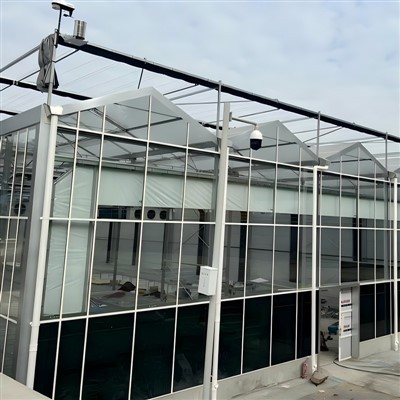

Hey there! If you’ve ever looked into investing in a Venlo greenhouse, you’ve probably wondered: is this actually gonna make sense financially? I get it—when you’re dropping cash on a big, durable structure that’s way more high-tech than the plastic hoop house you had in college, you can’t just go “yeah, that looks cool” and pull the trigger. As someone who’s spent the last 10 years building Venlo greenhouses (I’m not gonna name-drop my company, but you can guess who’s on the ground installing these things across the US), I’ve crunched so many ROI numbers I could do ’em in my sleep. Today, I’m breaking down exactly how to calculate your ROI for a Venlo greenhouse—no fancy MBA degree required, just real-world math and stuff I actually see working (or flopping) for growers.
First off, let’s make sure we’re on the same page about what a Venlo greenhouse even is, ’cause not everyone knows. For years, I’ve had growers reach out like “wait, is that just any glass greenhouse?” Nah, Venlo’s the commercial workhorse—super tall, modular, made with steel frames that hold up to wind, snow, and even that random hail storm that ruins a whole tomato crop. If you’re selling veggies, herbs, or even specialty flowers to grocery stores, restaurants, or farmers markets, this is the setup you want. Quick links if you wanna deep dive: Venlo Style Greenhouse lays out why it’s better than, say, a gable-style, and Venlo Glass Greenhouse talks about the glass specifics (hint: tempered, insulated—no replacing panels every year).
Alright, let’s cut to the chase. ROI isn’t just “how much money I make minus what I spend.” It’s a time-based metric that tells you when you’ll get your initial investment back, and then how much profit you’re pulling in after that. So to calculate it, we’ve got to break down three big buckets: Initial Costs, Annual Revenue, and Annual Operating Costs. Let’s run through each with real numbers—this is stuff I used last year for a 1-acre Venlo greenhouse client growing leafy greens, so it’s not made up.
First up: Initial Costs. This is the big one that scares most people. A 1-acre Venlo? Let’s say $250k to $400k total, depending on extras—like heating systems, irrigation, climate controls, shade cloth, even benches. Wait, why the range? Location! If you’re in Iowa where snow loads are heavy, the frame’s thicker, so pricier. If you’re in Florida where wind’s the main issue, you add extra bracing. Also, glass vs. polycarbonate? Most commercial growers go glass for light transmission, but poly is cheaper upfront. Quick side note: our most popular model is the VeGalvanized Venlo Glass Greenhouse: Insulated Tempered Glass Structure for Commercial Cultivation right now—insulated glass keeps heating costs way down in winter, which is a huge win for revenue.
Initial costs aren’t just the greenhouse itself, though. You’ve got site prep: leveling the land, digging utility lines for power, water, drainage (super important—Venlo’s got good drainage, but if your site floods, you’re toast). That’s another $20k to $50k. Then, you can’t forget permits, labor to install the greenhouse, and maybe a bit of training for you or your staff if you’ve never run a high-tech setup. Let’s ballpark total initial costs for that 1-acre example: $320k. That’s a solid middle number for a standard Venlo with basic climate controls, no frills.
Now, Annual Revenue. This is where Venlo crushes hoop houses, no cap. Why? Longer growing seasons, consistent yields, higher-quality crops that sell for more. Let’s stick with the leafy green client. 1 acre of Venlo? You can rotate crops 12 months a year, right? In a hoop house, you might only get 6-8 months because of cold or hot weather. The client I’m thinking of grows 4 different leafy greens (spinach, kale, arugula, mix) and sells all of ’em to a regional grocery chain that pays premium for local, pesticide-free stuff. Average yield: 15,000 pounds per month. That’s 180,000 pounds a year. The average price for leafy greens sold bulk to a grocery chain? $2 per pound. Wait, let’s do the math: 180,000 x $2 = $360,000 in annual revenue. But wait, that’s before operating costs—so let’s get to those.
Annual Operating Costs. This is the second big bucket you can’t sleep on. Let’s break it down:
- Supplies: Seeds, soil, fertilizer, pest control (Venlo’s enclosed, so less pests! That’s a win. You might use $5k a year here.)
- Utilities: Power for lights (in winter when days are short), pumps for irrigation, heating if you’re in a cold area. Our client used $35k a year here—with insulated glass from that VeGalvanized model, their heating was 20% lower than a guy with a non-insulated Venlo.
- Labor: You can run a 1-acre greenhouse with 2 full-time staff, plus you if you’re managing it. Let’s say $60k total a year.
- Maintenance: Venlo’s built to last, but you need to fix broken glass, tighten frames, replace filters. That’s $10k a year.
- Taxes/insurance: Let’s say $8k a year (your actuals might vary based on location, but this is a baseline).
Add all that up: $5k + $35k + $60k + $10k + $8k = $118,000 in annual operating costs. So annual profit before anything? $360k revenue minus $118k = $242k. Wait, that’s way higher than I thought at first—but hold on, that’s not pure profit yet, because we have to account for depreciation and taxes (oh right, I forgot those earlier).
Depreciation: Venlo greenhouses have a useful life for tax purposes of 15-20 years. The IRS lets you depreciate the initial cost over that time. Our initial cost was $320k, so annual depreciation is $320k / 20 years = $16k a year. That’s a non-cash expense, so it lowers your taxable income. Then, taxes: let’s say your tax rate is 20% on your profit (revenue minus operating costs minus depreciation). So taxable income is $242k - $16k = $226k. Taxes are $226k x 0.2 = $45,200. So net annual profit is $226k - $45.2k = $180,800.
Wait, hold on—let’s get to actual ROI calculation. There are two ways people talk about ROI: simple payback period, and annualized ROI. Simple payback period is how long it takes to get your initial investment back. Our initial investment was $320k. Net annual cash flow (remember, depreciation is non-cash, so we add it back? Wait, I might’ve messed that up earlier—let’s correct that, because that’s a common mistake. Cash flow is what you actually have in your pocket. So: Net profit after tax is $180,800, plus depreciation (since you didn’t write a check for that) = $180,800 + $16k = $196,800 annual cash flow.
Simple payback period: initial cost divided by annual cash flow. $320k / $196,800 = about 1.63 years. Wait, that’s like 19 months! Is that for real? For a leafy green grower? Yeah, because they’re selling high-demand crops with good margins. But wait, that’s a best-case scenario. What if you’re growing something slower, like tomatoes? Let’s test that. 1 acre of tomatoes: yield is maybe 8,000 pounds a month, average price $1.50 a pound. Annual revenue: 8,000 x 12 x $1.50 = $144k. Operating costs would be higher (more water, fertilizer, maybe pest control for tomato blight) — say $80k a year. Then net cash flow is (144k - 80k) - taxes + depreciation. That’d be around $50k a year, so payback period is 320k / 50k = 6.4 years. Still not terrible for a 20-year asset.
Now, annualized ROI. That’s the percentage return you get each year, over the life of the investment, not just how fast you get your money back. The formula is: [(Annual Cash Flow / Initial Investment) x 100%]. For our leafy green example: ($196,800 / $320,000) x 100% = 61.5% annualized ROI. That’s insane, right? But that’s because leafy greens have super fast turnover. If you’re growing tomatoes, ($50k / $320k) x 100% = ~15.6% annualized ROI, which is still way better than putting money in a savings account (which is like 0.5% right now) or even the stock market (average 7-10% annual).
But wait—there are variables that can throw all these numbers off, and I can’t ignore those. Let’s talk about the “what ifs” that I warn every client about:
- Location, location, location: If you’re in a place with high heating costs (like northern Minnesota), your utilities might jump to $60k a year, so your cash flow drops, payback period goes up to like 2.5 years. If you’re in Arizona, you need more shade cloth, so that’s extra cost, but heating’s free, so net is similar.
- Crop choice: Don’t just pick leafy greens because the numbers look good. What do the grocery stores in your area actually need? If there’s already a ton of leafy greens, you might have to sell for $1.50 a pound instead of $2, so revenue drops. Do a market survey first—go talk to local buyers before you buy the greenhouse.
- Maintenance: I’ve had a client skip annual frame tightening, and a wind storm bent a bunch of steel, costing $20k in repairs. That’s gonna add to your costs that year, so keep up on maintenance. Our Venlo greenhouses are built with galvanized steel, so rust’s less of a problem, but you still gotta take care of ’em.
- Supply chain issues: What if seed prices go up 30%? Or gas for your delivery truck goes up? All that hits your operating costs. Build a 10% buffer into your numbers—don’t use the perfect scenario, use the “worst case but still realistic” numbers.
Another thing I see people mess up: they forget the value of the greenhouse itself at the end of its life. Venlo greenhouses last 20+ years, so when you’re done using it, you can sell the steel frame, the glass, even the climate controls for a decent amount. That’s a salvage value—usually 10-15% of the initial cost. So that adds to your ROI. In our leafy green example, salvage value is $32k, so total return over 20 years is (196,800 x 20) + 32k - 320k = $3,936k + 32k - 320k = $3,648k. That’s way more than just the first 2 years’ cash flow.
Wait, let’s make this actionable. If you’re actually serious about calculating your own Venlo ROI, here’s a step-by-step checklist I give to every potential client:
- Pick your Venlo size: 1 acre? 2 acres? 0.5 acre? Venlo Style Greenhouse has size guides on their site that’ll help you.
- Get a personalized initial cost quote: Throw in site prep, permits, extras like heating. Don’t guess here—bad quotes = bad ROI numbers. We can hook you up with a custom quote if you need one.
- Calculate your projected annual revenue: Call local buyers, find out what they’ll pay per pound for your target crop, then figure out how many pounds you can grow in a Venlo (it’s way more than a hoop house).
- List all operating costs: Utilities, labor, supplies, maintenance, taxes. Be realistic—don’t lowball labor or utilities, that’s where people get burned.
- Account for depreciation and salvage value: Don’t forget these, they make a huge difference in your tax bill and long-term return.
- Run both simple payback and annualized ROI: That’ll tell you if it’s worth it. If your payback is under 5 years and annualized ROI is over 10%? That’s a no-brainer.
At the end of the day, Venlo greenhouses aren’t cheap, but they’re an investment that pays off if you do your homework. I’ve seen guys with cheap plastic hoop houses lose money because of pests, weather, and low yields, while Venlo growers are pulling six-figure profits year after year. The key is not just crunching the numbers, but making sure you’re growing a crop that’s in demand in your area, and getting a structure that’s built to last.


If you’re ready to stop guessing and start getting real numbers for your Venlo greenhouse, let’s chat. I can walk you through the latest models—like that VeGalvanized insulated glass one I mentioned earlier, which cuts heating costs by 20% compared to standard glass—and help you put together a custom ROI breakdown that fits your specific location and crop. No pressure, just real advice from someone who’s been in the trenches with these greenhouses for years.
References
- USDA Agricultural Marketing Service. (2023). Commercial Greenhouse Production Guidelines.
- National Greenhouse Manufacturers Association. (2022). Venlo Greenhouse Structural Durability and Cost Analysis.
- Internal Revenue Service. (2023). Depreciation Schedules for Agricultural Assets.