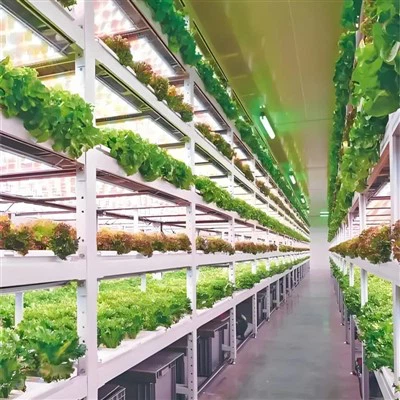

If you’ve ever spent time managing a commercial greenhouse, you know drip irrigation isn’t just “turning a knob and walking away.” The biggest mistake I see growers make? Sticking to a rigid irrigation schedule that works for one week, then falls apart as seasons shift, plants grow, or humidity spikes. As a [Greenhouse Drip Irrigation System] supplier (we’ve been selling and supporting these setups for 8 years, so trust me), adjusting your irrigation time isn’t guesswork—it’s matching your system to what your plants actually need, and even the tiniest tweak can save you water, cut your utility bills, and prevent root rot or nutrient burn.
First, let’s break down why static schedules fail. Greenhouses aren’t static environments. In spring, your tomato seedlings need way more frequent, shallow water than mature tomato plants in summer. A greenhouse in a dry, windy area will lose water to evaporation faster than one in a shaded, high-humidity spot. Even your plant type matters: leafy greens like lettuce need consistent light water, while pepper plants have deep roots that can handle longer, less frequent sessions. Our systems are built to adapt, but you have to adjust the timing to make them work for your space.


Let’s start with the basics: how to measure what’s actually happening under your soil. You can’t just water by the clock—you have to check. I tell every new grower I work with to grab a simple soil moisture meter (they cost $15, no fancy tech needed) or even stick your finger 2 inches into the growing medium. If it’s dry there, it’s time to water. If it’s still damp, hold off. But here’s the part most people miss: the right irrigation time length changes based on your medium. If you’re using perlite-heavy mix for succulent transplants, you’ll need 10-minute sessions twice a day. If you’re using coco coir for cuttings, 5-minute sessions three times a day might be enough. And if you’re using our [Smart Water and Fertilizer Integration System | Precision Irrigation Solution for Commercial Greenhouses], you can even link those moisture readings directly to the system to auto-adjust, no daily checks required.
Now, let’s walk through the step-by-step adjustments, organized by common greenhouse scenarios. This isn’t one-size-fits-all, but these are the shifts I’ve seen work for 9 out of 10 of our clients.
-
Adjust for seasonal changes. Winter is when most greenhouses slow down. Days are shorter, so plants are photosynthesizing less, meaning they need less water. I see growers who run 20-minute sessions every morning in summer doing the same in December—huge mistake. In winter, cut your irrigation time by 30-40% and only run it once a day, or every other day. Why? The air is cooler, so evaporation is almost zero, and plant growth slows. Spring is the flip side: as days get longer and temps rise, bump your time back up by 20% and add a midday session if your humidity stays below 60%. Summer is tricky—you might need to run sessions twice a day, each 15-25 minutes, depending on your crop. But always check soil moisture: if it’s above 70% (most meters have a reading), skip the extra midday run.
-
Tweak based on your crop’s growth stage. Seedlings and cuttings are fragile. Their roots are tiny, so they can’t take a lot of water at once. If you overwater young plants, they’ll get fungal disease and die fast. For these, use short, frequent runs—3-5 minutes every 4-6 hours, especially if you’re growing in trays with shallow medium. Once those seedlings have 2-3 true leaves (not the first tiny ones), you can stretch the time to 8-10 minutes, and drop to twice a day. Mature fruiting plants (tomatoes, peppers, cucumbers) need longer, less frequent water. For these, 15-20 minutes every 12 hours is usually perfect—their deep roots will pull water from lower in the medium, and you won’t risk wetting the leaves (which causes blight). We built our [Greenhouse Drip Irrigation System] with adjustable emitters for exactly this: you can crank up the flow rate for mature plants without overwatering young ones in the same bed.
-
Account for environmental factors you can control. Humidity and wind are the two big ones in greenhouses. If you have a vented greenhouse, windy days will blow moisture out of the soil before plants can absorb it. On those days, extend your irrigation time by 10%—but don’t run it at high wind, because it’ll just evaporate. Wait for a lull, or run a slightly longer session when wind dies down. If your greenhouse has high humidity (over 80% consistently), cut your time by 25% and check soil moisture every day—high humidity means plants transpire less, so they don’t need as much water. Even your location matters: if you’re in a coastal area with mild temps, your irrigation time won’t swing as much as a grower in Arizona with 100-degree days.
Wait, let’s talk about a common mistake I see all the time: overwatering. It’s way more harmful than underwatering, because roots need oxygen too. If your irrigation time is too long, the soil stays soggy, and roots drown. How do you tell? Yellow lower leaves, mushy stems, or a sour smell coming from the soil. If that’s happening, cut your time by 15% and add a 10-minute “dry” period between sessions—let the top inch of soil dry out a little before watering again. Our system has flow sensors that can alert you if a line is delivering too much water, which is super helpful for catching these issues fast.
Now, what about automating this? A lot of growers ask if they should skip manual adjustments and just use a timer. Timers are great, but they’re only as good as your input. If you set a timer for 10 minutes every morning but it rains inside your greenhouse (yes, that happens with condensation), your timer will overwater. The smart way to do it is pair your drip system with a controller that connects to your local weather or your in-house moisture sensors. That’s exactly what our [Greenhouse Drip Irrigation System] supports—you can program it to adjust time automatically based on real-time data, so you don’t have to be there every morning to check.
Let’s use a real example from a client of ours who grows lettuce in a 2000 sq ft greenhouse. Last spring, they were running 10-minute sessions twice a day, and their lettuce was getting tip burn (a sign of inconsistent water or nutrient uptake). They adjusted: cut each session to 7 minutes, added a third midday session of 5 minutes, and checked humidity. Turns out their humidifier was set too high, so they dropped it from 70% to 60%—within two weeks, the tip burn was gone, and they used 15% less water. That’s the power of small, consistent adjustments.
Another example: a pepper grower in Texas. Their summer temps hit 95 degrees, so they were running 20-minute sessions every 12 hours. They noticed fruit cracking, which is from uneven water—too much, too fast during ripening. They tweaked to 15-minute sessions three times a day (every 8 hours) and added a shade cloth to cut the sun intensity. Now their fruit cracking is down, and their water bill is lower because they’re not losing water to evaporation.
So, how do you put this all together right now? Grab your soil moisture meter, check your crops, and note:
- What’s your current irrigation time (length and frequency)?
- How’s your soil moisture at 2 inches? Is it consistent or drying out fast?
- What’s the humidity in your greenhouse right now?
- What growth stage are your plants in?
If you’re still guessing, maybe it’s time to upgrade your setup. Our [Greenhouse Drip Irrigation System] is built to make these adjustments easy—no complicated tech, just simple controls to tweak time, frequency, and flow. And if you’re looking to go even smarter, our [Smart Water and Fertilizer Integration System | Precision Irrigation Solution for Commercial Greenhouses] ties irrigation and fertilizer together, so you can adjust both at the same time for even better plant health.
Wait, I know some small-scale growers are worried about cost. I get it—we’ve worked with hobbyist growers with 100 sq ft setups and big commercial operations with 10 acres. Our systems are scalable, so you don’t have to break the bank to get the right fit. The key is that adjusting irrigation time doesn’t have to be expensive—it’s just being aware of what your plants need, not what the calendar says.
At the end of the day, the goal of adjusting irrigation time is to give your plants exactly what they need, no more, no less. Too little, and they wilt and don’t produce. Too much, and you waste water and money on dead plants. It’s a balance, and once you nail it, you’ll see better yields, less disease, and lower utility bills.
If you’re ready to upgrade your system or get a custom setup for your greenhouse, hit us up. We can walk you through what adjustments make sense for your crops, space, and goals. Don’t stick with a one-size-fits-all schedule—your plants deserve better, and your wallet will thank you.
References:
- USDA Agricultural Research Service. (2022). “Drip Irrigation Management for Greenhouse Vegetables.” U.S. Department of Agriculture.
- International Society of Horticultural Science. (2021). “Precision Irrigation for Controlled Environment Agriculture.” ISHS Acta Horticulturae.
- Clemson University Cooperative Extension. (2020). “Soil Moisture Monitoring for Greenhouse Crop Production.” Clemson University.
- Greenhouse Management Magazine. (2023). “Common Drip Irrigation Mistakes and How to Fix Them.” Greenhouse Media Group.